By Developers, For Developers

- Pages:
- Published:
- August 2023
- ISBN:
- Edition:
- 1
In Print
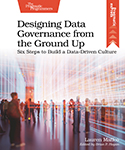
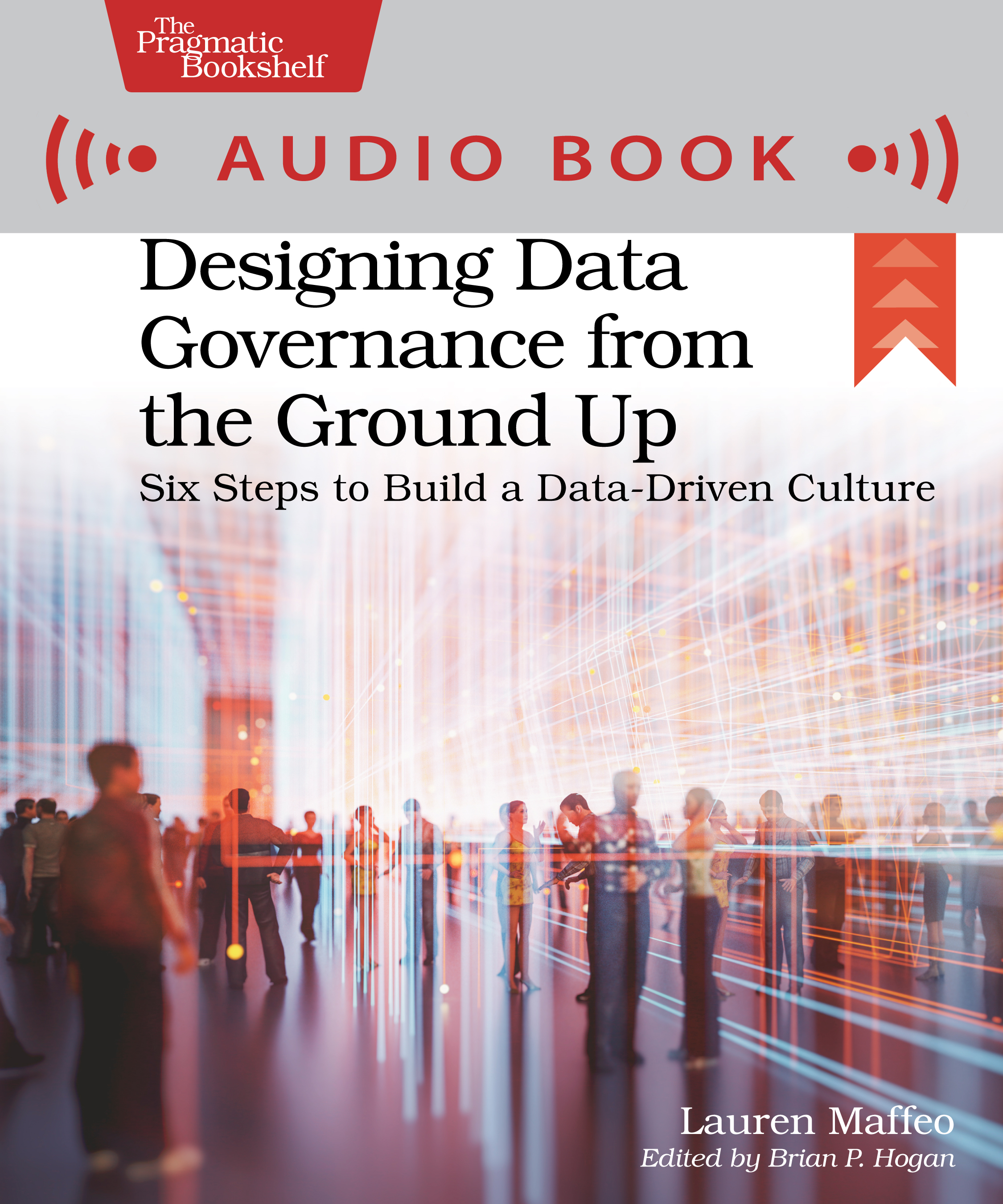
Designing Data Governance from the Ground Up
Six Steps to Build a Data-Driven Culture
by Lauren Maffeo
Businesses own more data than ever before, but it’s of no value if you don’t know how to use it. Data governance manages the people, processes, and strategy needed for deploying data projects to production. But doing it well is far from easy: Less than one fourth of business leaders say their organizations are data driven. In Designing Data Governance from the Ground Up, you’ll build a cross-functional strategy to create roadmaps and stewardship for data-focused projects, embed data governance into your engineering practice, and put processes in place to monitor data after deployment.
Purchase the ebook here
Buy the audiobook here for $24.99 Available in mp3, m4b, and ogg formats except as noted.
In the last decade, the amount of data people produced grew 3,000 percent. Most organizations lack the strategy to clean, collect, organize, and automate data for production-ready projects. Without effective data governance, most businesses will keep failing to gain value from the mountain of data that’s available to them.
There’s a plethora of content intended to help DataOps and DevOps teams reach production, but 90 percent of projects trained with big data fail to reach production because they lack governance.
This book shares six steps you can take to build a data governance strategy from scratch. You’ll find a data framework, pull together a team of data stewards, build a data governance team, define your roadmap, weave data governance into your development process, and monitor your data in production.
Whether you’re a chief data officer or individual contributor, this book will show you how to manage up, get the buy-in you need to build data governance, find the right colleagues to co-create data governance, and keep them engaged for the long haul.
What You Need
Resources
Releases:
Contents & Extracts
- Preface

- Is This Book for Me?
- What’s in This Book?
- How Will This Book Help Me Reach My Goals?
- Find Your Data Framework
- Define Data Governance
- Clarify Your Company’s Mission Statement
- Find Your Data Governance Framework
- Your Next Step
- Select Data Stewards
excerpt
- What Are Data Stewards?
- Fill Your Council with the Right People
- Your Next Step
- Build Your Data Governance Council
excerpt
- Find the Most Effective Sponsor
- Convince Colleagues to Join Your Council
- Clarify the Cadence for Your Council Meetings
- Confirm Key Principles for Your Council
- Define Data Domains
- Write a Data Dictionary
- Your Next Step
- Write Your Data Roadmap
- Assess Your Data’s Current State
- Create a Current State Process Map
- Design Your Desired Future State for Data Governance
- Choose Which Outcomes You’ll Use to Measure Success
- Put Prioritized Ideas on Your Data Roadmap
- Your Next Step
- Practice Governance-Driven Development
- Ask if You Have the Right Data Infrastructure
- Include Technical Partners in Your Data Governance
- Build with a Few High-Level Customers in Mind
- Give Your Data Stewards Room to Fail
- Start Scaling Past Your Super Users
- Your Next Step
- Monitor Data in Production
- Make a Plan to Govern Data Throughout the Life Cycle
- Practice Data Mesh Principles
- Automate Federated Data Governance
- Execute Data Security Standards
- Set Specific Goals for Your Production Monitoring
- Use Data Lineage Tracking
- Use Feature Stores to Prevent Data Drift
- Ship New Data as Deployable Units
- Track Regulation Changes
- Your Next Step
Author
Lauren is an award-winning designer and analyst who currently works as a service designer at Steampunk, a human-centered design firm serving the federal government. She is also a founding editor of Springer’s AI and Ethics journal and an area editor for Data and Policy, an open access journal with Cambridge University Press. Lauren has written for Harvard Data Science Review, Financial Times, and The Guardian, among other publications. Lauren is a fellow of the Royal Society of Arts, a member of the Association for Computing Machinery’s Distinguished Speakers Program, and a member of the International Academy of Digital Arts and Sciences, where she helps judge the Webby Awards.Buy the audiobook here for $24.99 Available in mp3, m4b, and ogg formats except as noted.